Consultant-Led Photodynamic Therapy in Central London
Photodynamic Therapy (PDT) at LSDC Healthcare is delivered by consultant dermatologists as a targeted, tissue-sparing treatment for sun-damaged skin and selected superficial skin cancers.
PDT combines a photosensitising agent with controlled light exposure to destroy abnormal cells while preserving surrounding healthy skin, making it particularly valuable for cosmetically sensitive areas.
Treatment is provided in a private, consultant-only environment in the City of London, with careful patient selection and structured follow-up.
What is Photodynamic Therapy (PDT)?
Photodynamic Therapy is a non-surgical dermatological treatment that uses a light-activated medication to selectively destroy abnormal or pre-cancerous skin cells.
A photosensitising cream is applied to the affected area and absorbed preferentially by abnormal cells. After an incubation period, the area is exposed to a specific wavelength of light, activating the medication and causing targeted cell destruction.
Who is Photodynamic Therapy for?
PDT may be recommended for patients with:
Actinic keratoses (solar keratoses)
Field cancerisation due to chronic sun damage
Superficial basal cell carcinoma (selected cases)
Areas with multiple lesions unsuitable for repeated surgery
Lesions on the face or scalp where tissue preservation is important
Your consultant will confirm suitability following specialist assessment.
Clinical Benefits and Indications
Clinical benefits of PDT include:
Targeted destruction of abnormal cells
Preservation of healthy surrounding skin
Excellent cosmetic outcomes
Treatment of multiple lesions in one session
Reduced scarring compared with surgery
Day-case, outpatient procedure
Indications include:
Widespread actinic damage
Superficial, low-risk non-melanoma skin cancers
Pre-cancerous lesions requiring field treatment
How LSDC Delivers This Differently
At LSDC Healthcare, PDT is delivered with:
Consultant-led diagnosis and treatment planning
Careful lesion selection based on evidence-based guidelines
High-quality photosensitising agents and calibrated light sources
Individualised incubation and exposure protocols
Integration with surgical or medical treatments where required
Structured surveillance for skin cancer prevention
Patients benefit from precision treatment and continuity of care.
Diagnostics and Investigations Involved
Before PDT, your consultant may perform:
Full clinical skin examination
Dermoscopic assessment
Diagnostic biopsy (if diagnosis is uncertain)
Photographic documentation
Review of previous treatments or histology
Further investigations are arranged if clinically indicated.
Recovery, Follow-Up and Ongoing Care
PDT is performed as a day-case outpatient treatment
Treated areas may be red, sore, or crusted for several days
Strict light avoidance is required for 24–48 hours
Healing typically occurs over 1–2 weeks
Follow-up appointments assess response and clearance
Ongoing skin surveillance and prevention advice provided
Insurance and Self-Pay
Photodynamic Therapy is commonly covered by UK private medical insurers, including Bupa, AXA, Aviva, Vitality and WPA, subject to policy terms and authorisation.
For self-pay patients, transparent pricing is discussed in advance of treatment.
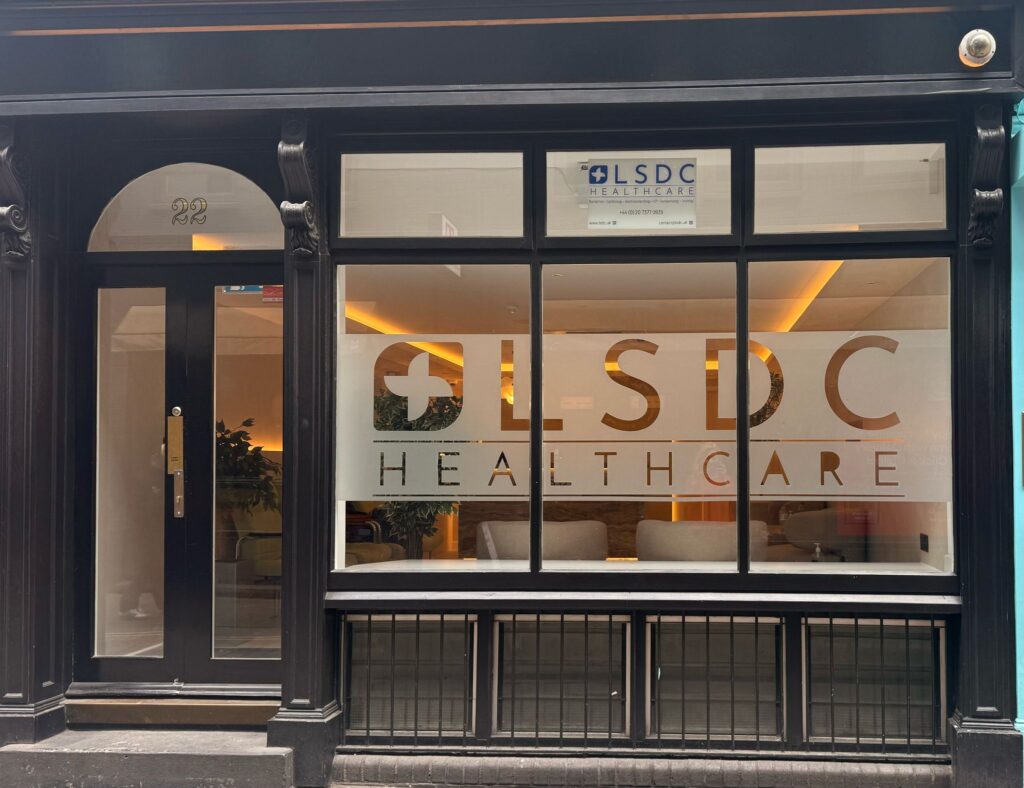
LSDC Healthcare
A couple of minutes outside Liverpool St Station, this excellent facility is conveniently located for Medical consultations in London.
This facility is open during the evenings making it an excellent choice for busy professionals.
Book A PDT Consultation
If you have sun-damaged skin, actinic keratoses, or have been advised to consider PDT, our consultants offer expert assessment and tailored treatment planning.
Appointments are available at our Central London clinic.
FAQ — Photodynamic Therapy (PDT)
Is Photodynamic Therapy painful?
Some patients experience stinging or burning during light exposure. This is temporary and managed with cooling measures and pain relief if required.
How long does PDT take?
The treatment involves an application phase followed by light exposure. Total visit time is usually several hours due to the incubation period.
How many PDT sessions will I need?
Some conditions respond to a single session, while others may require repeat treatments depending on severity and response.
Will PDT leave scars?
PDT is a non-surgical treatment and does not usually cause scarring, making it suitable for visible areas such as the face and scalp.
Can PDT treat skin cancer?
PDT is suitable for selected superficial basal cell carcinomas and pre-cancerous lesions. Your consultant will advise if it is appropriate for your diagnosis.
Is Photodynamic Therapy covered by private insurance?
PDT is often covered by UK private medical insurers, subject to policy terms, diagnosis, and prior authorisation.