
Consultant-Led Electrosurgery in Central London
Electrosurgery & Curettage at LSDC Healthcare is delivered by consultant dermatologists as a precise, outpatient treatment for selected benign and pre-malignant skin lesions.
This technique combines gentle scraping (curettage) with controlled electrical current to destroy abnormal tissue while preserving surrounding healthy skin.
All procedures are performed in a private, consultant-only setting in the City of London, following expert clinical assessment and diagnosis.
What is Electrosurgery & Curettage?
Electrosurgery & curettage is a minor dermatological procedure used to remove superficial skin lesions.
The lesion is carefully scraped away (curettage), and an electrical current is applied to the area to destroy residual abnormal cells and control bleeding.
It is an established treatment for selected low-risk and superficial lesions.
Who is Electrosurgery & Curettage for?
This treatment may be suitable for patients with:
-
Seborrhoeic keratoses
-
Viral warts
-
Actinic keratoses
-
Selected superficial basal cell carcinomas (low-risk cases)
-
Benign epidermal growths
-
Lesions unsuitable for cryotherapy or topical treatment
Your consultant will confirm suitability based on lesion type, location, and histological certainty.
Clinical Benefits and Indications
Clinical benefits include:
-
Effective destruction of abnormal tissue
-
Quick, in-clinic procedure
-
No surgical excision required
-
Controlled bleeding and rapid treatment
-
Suitable for multiple lesions
-
Generally favourable cosmetic outcomes
Indications include:
-
Benign or pre-malignant lesions
-
Superficial, well-defined growths
-
Patients unsuitable for excision
How LSDC Delivers This Differently
Electrosurgery at LSDC Healthcare is characterised by:
-
Consultant-led diagnosis and treatment
-
Careful lesion selection and confirmation
-
Precise energy delivery tailored to lesion type
-
Judicious use to avoid overtreatment
-
Seamless escalation to biopsy or excision if required
-
Clear aftercare and follow-up planning
Patients benefit from clinical accuracy and safety, not protocol-driven treatment.
Diagnostics and Investigations Involved
Before electrosurgery, your consultant may perform:
-
Full clinical skin examination
-
Dermoscopic assessment
-
Photographic documentation
-
Diagnostic biopsy (if there is any diagnostic uncertainty)
Electrosurgery is only performed when the diagnosis is clinically secure.
Recovery, Follow-Up and Ongoing Care
-
Procedure is performed under local anaesthetic
-
Mild discomfort or crusting may occur
-
Healing typically occurs over 2–4 weeks
-
Written wound care instructions provided
-
Follow-up arranged if lesions recur or symptoms persist
-
Ongoing skin surveillance where indicated
Insurance and Self-Pay
Electrosurgery & curettage may be covered by UK private medical insurers, including Bupa, AXA, Aviva, Vitality and WPA, subject to policy terms and clinical indication.
Self-pay patients receive transparent consultant-led pricing, confirmed before treatment.
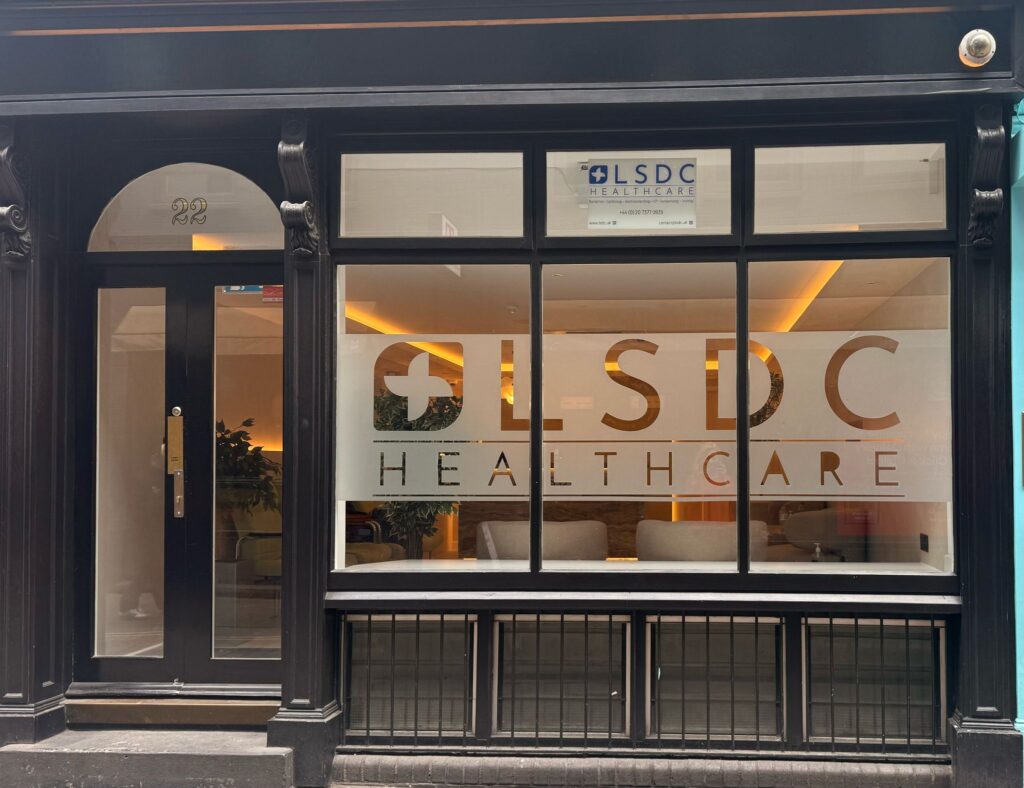
LSDC Healthcare
A couple of minutes outside Liverpool St Station, this excellent facility is conveniently located for Medical consultations in London.
This facility is open during the evenings making it an excellent choice for busy professionals.
Book An Electrosurgery Consultation
If you have persistent redness, visible veins, or pigment changes and would like specialist assessment, our consultants provide expert evaluation and tailored laser treatment planning.
Appointments are available at our Central London clinic.
FAQ — Electrosurgery & Curettage
Is electrosurgery painful?
The procedure is performed under local anaesthetic, so pain during treatment is minimal. Mild soreness afterwards is usually short-lived.
How long does electrosurgery take?
Most treatments take 10–30 minutes, depending on the number and size of lesions being treated.
Will electrosurgery leave a scar?
Scarring is uncommon but possible. Consultant technique and careful aftercare help minimise cosmetic impact.
Is electrosurgery suitable for skin cancer?
It may be used for selected low-risk, superficial lesions. Your consultant will advise if excision or alternative treatment is more appropriate.
How long does healing take?
Most areas heal within 2–4 weeks. Healing time depends on lesion size, depth, and location.
Is electrosurgery covered by private insurance?
Coverage depends on diagnosis and insurer policy. Our team can advise on authorisation and self-pay options.